Thursday, May 7, 2009

Signing Off!


This year has been a great year in 8Th grade earth science. All these posts are in response to assignments given by this blog {click on link to see}. I have learned a lot this year. My favorite topic I learned about was the Weathering and Erosion section because I learned a lot in it and I can actually see all of this happening to apply my knowledge. I think about weathering and erosion every time a see an example of it now, which is almost every day. Mechanical weathering was one thing that was cool to learn, because I had never thought about ice splitting rock.

Astronomy
In astronomy, I think I enjoyed learning about the different layers of the earth because I've always wondered where weather and stuff formed. The hot air ballon lab was pretty neat too.


Weather and Climate (Earth's Atmosphere)
In this section on Weather and Climate, I liked learning about the different fronts (cold and warm). I never knew what the weird symbols on a weather map meant, but now i know they stand for different kinds of fronts. The computer lab where it showed the formation of clouds in between fronts was really neat.


Geology
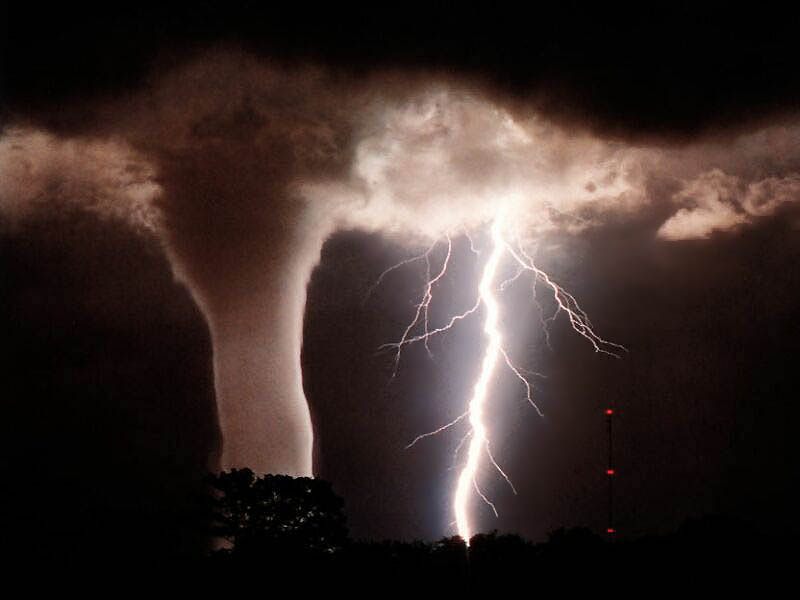
I've already done plate tectonics so that was kind of bland. Learning about the different kinds of volcanoes was sort of interesting because i have seen every kind discussed before and now i know how they formed. It was also neat to learn about all the rocks volcanoes form.


Earth's Waters
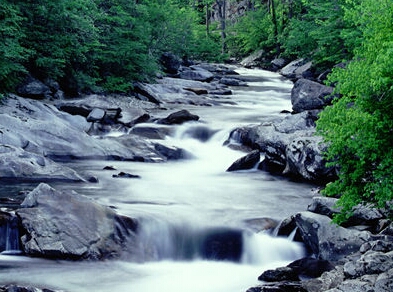
In this section i liked to learn about wetlands, lakes, and ponds. I never even thought about the process of eurification which can slowly "kill" a still body of water. I also had fun taking a picture of a river for the science project.

-Farewell

-Alex

Monday, May 4, 2009

Colorado Springs Water source

In order to reach Colorado springs our water goes from the Homestead reservoir --> Turquois lake --> twin lakes reservoir --> clear creek resevoir --> Otero pumping center --> Twin rocks pumping station --> Rampart reservoir. 200 miles total distance built in mid 60s old price 150 million - nowadays price 950 million. Water mostly from snow melt. Great water quality. Finally discharged into fountain creek. Conservation is initiated in Colorado Springs. Maybe a new pipe line system in the future.

Wednesday, April 22, 2009

Water cycle

  1. The water cycle is basically the system of condensation, evaporation, runoff, and precipitation that refreshes and purifies our water and transports water from the ocean onto land (or vice versa).
  2. The same water we have now has been around sinse the Earth first formed water, so it might have begun billions of years ago and it will never have and end until the water is somehow gone from the earth. It is a continuous cycle.
  3. First the water in the puddle evaporates and turns into water vapor, then it condenses on dust or pollution particles until its gets heavy enough to fall down as possibly rain.

Tuesday, April 21, 2009

Earth day presentation


Annotated Bibliography

http://en.wikipedia.org/wiki/Solar_energy
This source was one of my main information centers. It has almost everything you could want to know on one page of data from economics to the functions of a solar panel. This was one of my best sources.
http://www.howstuffworks.com/solar-cell.htm
This explained indepthly how a solar panel works. It basically said that there are bunches of little solar cells on a solar panel that all collect energy. This energy is then fed back through an electrical wire.
http://www.alternative-energy-news.info/technology/solar-power/
This basically explains that solar power is the power from the sun(witch can supply our energy needs 8,500 times over). It said our main problem was to harness it efficiently.
http://www.otherpower.com/otherpower_solar.html
This listed all the other ways to use solar power, like passive solar, and gave a basic description of solar power in general. This site was also very helpful because it gave some new information that i didn't know.

Thursday, April 16, 2009

What, specifically about your topic, are you going to research?

Our Groups topic is solar power, and the Question i am seeking To answer is this: What in essence is solar power and how does it work?
In essence solar power is the power that comes from the sun. The energy from the sun that reaches the Earth is said to have so much energy it could supply our energy demands 8,500 times over. The problem facing us is how to capture this energy cost effectively and efficiently. So far the main method to do this is with solar panels.

What conclusions did you come to? What do you recommend average citizens do to make a difference? Be specific. This is the main part of your assignment. A great way to both save money and live greener would be to power businesses/homes with solar panels. I have a solar panel on the top of my house and it cuts our electric bill more than in half. I recommend everyone have solar panels installed.

What would happen if, worst-case scenario, nobody listened to your recommendations?

The world as we know it would end. The air would be to polluted to sustain life and carbon dioxide emmisions from cars and factories would overheat the planet and kill all life on earth. Worst case scenario.

What would happen if, best-case scenario, everybody listened to your recommendations?

The world would prosper. We would have an energy efficient self sustained planet that would not run out of energy until the sun exploded.

Tuesday, April 14, 2009

Penny Surface Tension

Penny Picture From
This experiment is designed to tet how many drops of water can be dropped onto a penny without the water falling off the penny. I predicted that 6 drops from a water dropper would be all. What actually happened was it held 32 drops of water before it overflowed. I think it took so much water to overload the penny because of surface tension, or water "sticking" together because it is polar.

Thursday, April 9, 2009

Universal Solvant Poster {click on link}


http://docs.google.com/Doc?id=dd97qxk3_61c7scj4gb

Monday, March 30, 2009

Florida Everglades


This is a blog on my trip to the Florida Everglades. I am here to study the vast amount of water in the Everglades and how it creates the diverse variety of organisms living there. The Everglades are a large swampy area home to crocodiles, alligators, fish, birds, and many other living things. Every season flood waters carry nutrients from the flooded river onto the vast Everglade flood plain. This naturally makes the soil very fertile, and the grass very tall, and the animals that eat the grass very healthy, and the animals that eat those animals healthy, and so on and so forth.
While I was there, I must have seen at least 12 alligators and crocodiles.
The water in the everglades is some of the richest in nutrients anywhere, due to all of the decomposing organisms on the bottom of the river. What I observed from my trip to the everglades is that the quality of water determines the quality of all the life around it. When I was there, I also noticed lots of human development in the area. I picked up at least two pieces of trash in the river. If the humans continue to pollute the river, both by trash and by chemical runoff from nearby farms and buildings, it will ruin the water and kill the diverse life forms relying on the water. The fertile soil and plants will also cease to exist if this continues. The Everglades are very beautiful and very diverse. Please help to keep it that way. Thank you!
HERE IS A LINK TO LEARN MORE ABOUT THE EVERGLADES

http://www.cotf.edu/ete/modules/everglades/FEmain.html

Tuesday, January 20, 2009

earth quake web quest


1.)When I looked at the charts, it seemed to me that most of the earthquakes happened along mountain ranges.

2.)I think the reason for this is is that where mountains are there are likely to be earthquakes because of the fact that earthquakes formed the mountains, and are still forming them today. What caused the formation of the mountains was the rise of lava, so these areas also have lots of magma trying to push through the crust.

3.)It is called the ring of fire.
Earthquake pics:

4.)The nearest earthquake to Manitou was in Nevada. This earthquake problably was not felt. Magnitude 2.9. this earthquake is about 100 times more powerfull than a scale 1 earthquake.
Date-Time

* Tuesday, January 27, 2009 at 01:15:34 UTC
* Monday, January 26, 2009 at 05:15:34 PM at epicenter

Location 40.987°N, 114.977°W
Depth 16 km (9.9 miles) set by location program
Region NEVADA
Distances

* 14 km (8 miles) S (183°) from Wells, NV
* 26 km (16 miles) ESE (109°) from Deeth, NV
* 34 km (21 miles) NW (308°) from Spruce, NV
* 68 km (42 miles) ENE (76°) from Elko, NV
* 261 km (162 miles) W (277°) from Salt Lake City, UT

Location Uncertainty Error estimate not available
Parameters Nph= 13, Dmin=0 km, Rmss=0 sec, Gp= 0,
M-type=local magnitude (ML), Version=1
Source

* Seismological Laboratory, University of Nevada, Reno

Event ID nn00273625

5.) Here is an earthquake the just happened near Indonesia. I did some reasearch and found that earthquakes do often occur in Indonesia.

6.)In the event of an Earthquake, one should try to find a sturdy tabl to be underneath.